Why the Georgetown Campus Plan Matters

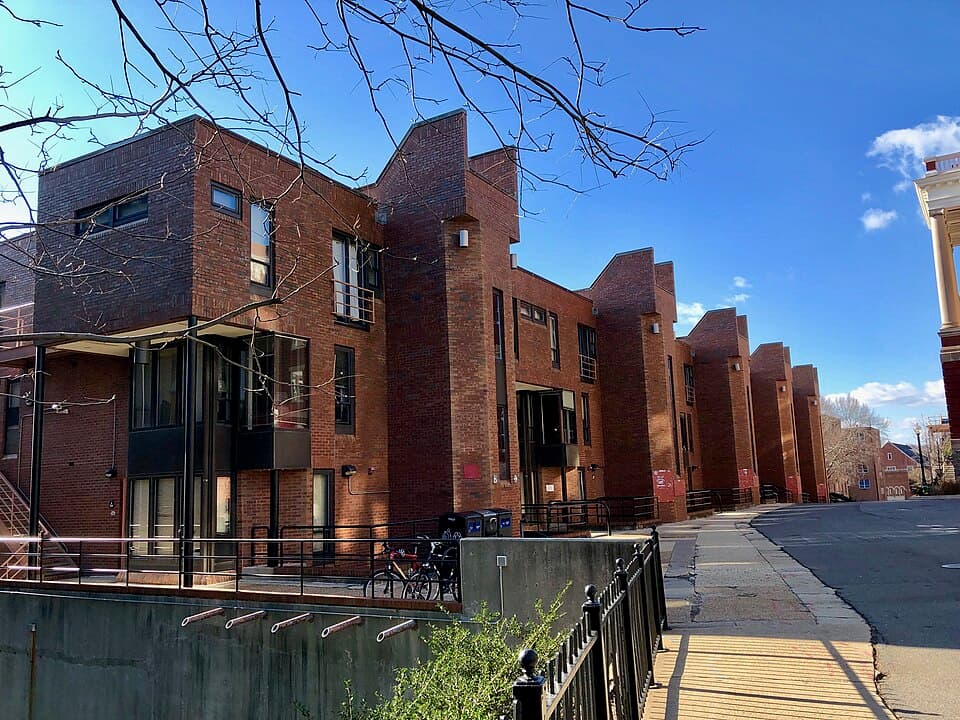
In 2010, after years of tense encounters with its neighbors, Georgetown formed the Georgetown Community Partnership to negotiate its place in the neighborhood. This committee has limited new housing construction, decided what can be renovated, and determined how many students are admitted; it has also advanced programs like SNAP that have eroded campus culture.
Despite initially promising to involve students, the GCP consists primarily of citizens' associations and their elected officials in Foxhall, Burleith, and Georgetown. GUSA, the only group representing Students, is largely brushed aside by city and campus officials. It has become the status quo to penalize students for minor mistakes and to stop allowing college students the leeway needed to grow as people.
As a major part of this community, we have long left local representation neglected - only one of two student-only SMD seats is currently occupied, and student turnout is abysmal in the five districts that claim a share of campus. To protect our college experience, students must elect students to ANC seats. If you’re not in a swing state, register to vote from your dorm room and do your research to elect more student representation in our neighborhood.
Erasure of Campus Culture
Across the years, we’ve lost many of the spaces where students could gather. In response to a string of noise complaints, the 2015 Campus Plan required students to spend 3 of their years on campus. This is almost unheard of in higher education and makes Georgetown one of the most compact campuses in the country. When students do have the chance to lease houses off campus, they’re forced to sign leases years in advance.
Few students would know it, but the center of college life used to actually be in Healy’s basement. The now-defunct Healy Pub gave students a safe place to drink, hang out, and stumble back to their dorm room without worrying about catching an Uber home. Unsurprisingly, it also led to fewer off-campus noise complaints. Students would prefer to keep their parties on campus given the opportunity - the drive of noise into the neighborhoods is largely at the hands of restrictive university policy.
The Campus Plan has also driven Georgetown’s costly headfirst leap into the Capitol Campus. To skirt restrictions and keep growing revenue (a laudable goal for an educational institution), the administration has opted to buy entire city blocks and force programs across the city, fracturing our community along arbitrary lines. Students classified under the Capitol Campus Program are forbidden to live in any of the neighborhoods around the Hilltop, and the University has a stated objective to lower senior campus housing to just 550 beds.
While one can appreciate not wanting a University on your doorstep, our campus did not suddenly appear last week. Engagements with our neighbors feel increasingly hostile and unfair to student interests. Where the GCP was designed as a partnership with all members of the community, it more and more feels like an avenue for the University to speak with homeowners associations and force the consequences on students.
The Parking Thing
Many students received a barrage of emails demanding signed compliance with a new parking policy earlier this year. This change, from the 2025 Amended Campus Plan, has an even weirder enforcement plan. Cars patrol the neighborhood, take photos of license plates, and try to match them to students. If you agreed to that policy, which took only one checkbox, you actually agreed to the University running your name and known addresses against every car’s registration. If the Campus Panopticon finds you guilty, your case is referred to student conduct, apparently without exception.
Even if you aren’t concerned about the privacy violations it creates, license plate readers are plainly a poor way to reduce parking. Rather than encourage all students to avoid street parking, it will be effectively impossible to enforce and issue citations against students whose vehicles are registered in their parents’ names. Ultimately, this policy will only punish students who work hard to buy their own cars and register them in their own name. Positive punishment cannot be our approach to real campus mobility issues - if street parking is a problem, create more opportunities for reliable public transit, and don’t increase pricing in the campus garages.
It is hard to imagine that street parking was so egregious as to demand such an invasion. Regardless, every Hoya should be concerned with the Administration’s willingness to surveil its students and police minor grievances. Rather than build alongside students, Georgetown is being needlessly punitive – 2 off-campus violations go on a student’s record as a disciplinary infraction and can even lead to housing probation.
Parking is not the only off-campus violation. Improper trash disposal, like having a too-full garbage can, not writing your address on the bin, or having more than two outside cans, can also count. And if you were stuck inside during last year’s snowcrete epidemic, you could have also been held liable for not clearing the snow within 8 hours, never mind that the University failed to clear the snow for days at a time. The Campus Plan, negotiated largely by the University, has created an unnecessarily harsh environment for its students.
What Can We Do
On November 3rd, every ANC seat is up for election. If you live on campus, you have the right to register via your on-campus address and vote for a student representative for your seat. You can find students running for office or register to vote on this site today.